July is here. And for millions of people around the world, that means one thing: it is time to choose to refuse.
Plastic Free July is a global movement that challenges people to reduce or eliminate single-use plastics for the month. It started with a small team in Perth, Australia in 2011 and has since grown into one of the most widely observed environmental campaigns on the planet.
In 2024, more than 100 million people from over 190 countries participated, and the Plastic Free Foundation estimates that collective effort prevented the use of 290 million kilograms of plastic.
For Filipinos, this challenge is not just timely, it is urgent. The Philippines generates roughly 2.7 million tons of plastic waste annually, and a significant portion of it ends up in the ocean. This July, we have every reason to take part.
Whether you are joining for the first time or looking for fresh ideas to deepen your plastic-free practice, this guide covers everything you need to know, what the challenge is, why it matters here at home, and practical habits you can start today.
What is Plastic Free July?
Plastic free July is a global environmental movement that encourages individuals, communities, businesses, and governments to reduce their reliance on single-use plastic for the month of July. Participants take the Plastic Free Pledge, a personal commitment to make practical, sustainable changes that reduce plastic waste.
How it began
In 2011, Rebecca Prince-Ruiz and a small team in Perth, Australia launched a simple campaign encouraging people to cut down on single-use plastics for a month. The idea was approachable by design: the Plastic Free Pledge is not about radical lifestyle overhaul but about choosing one practical action that works for you.
The initiative grew into a global campaign supported by the Plastic Free Foundation, a non-profit organization that empowers individuals, organizations, and governments to take action against plastic pollution. Every year, the foundation drives the challenge while sharing resources, solutions, and community support to help participants stay motivated well past July.
290M kg of plastic prevented in 2024 alone — by 100 million participants across 190 countries (Plastic Free Foundation, 2024)
Why this Matters for Filipinos: The Plastic Problem at Home
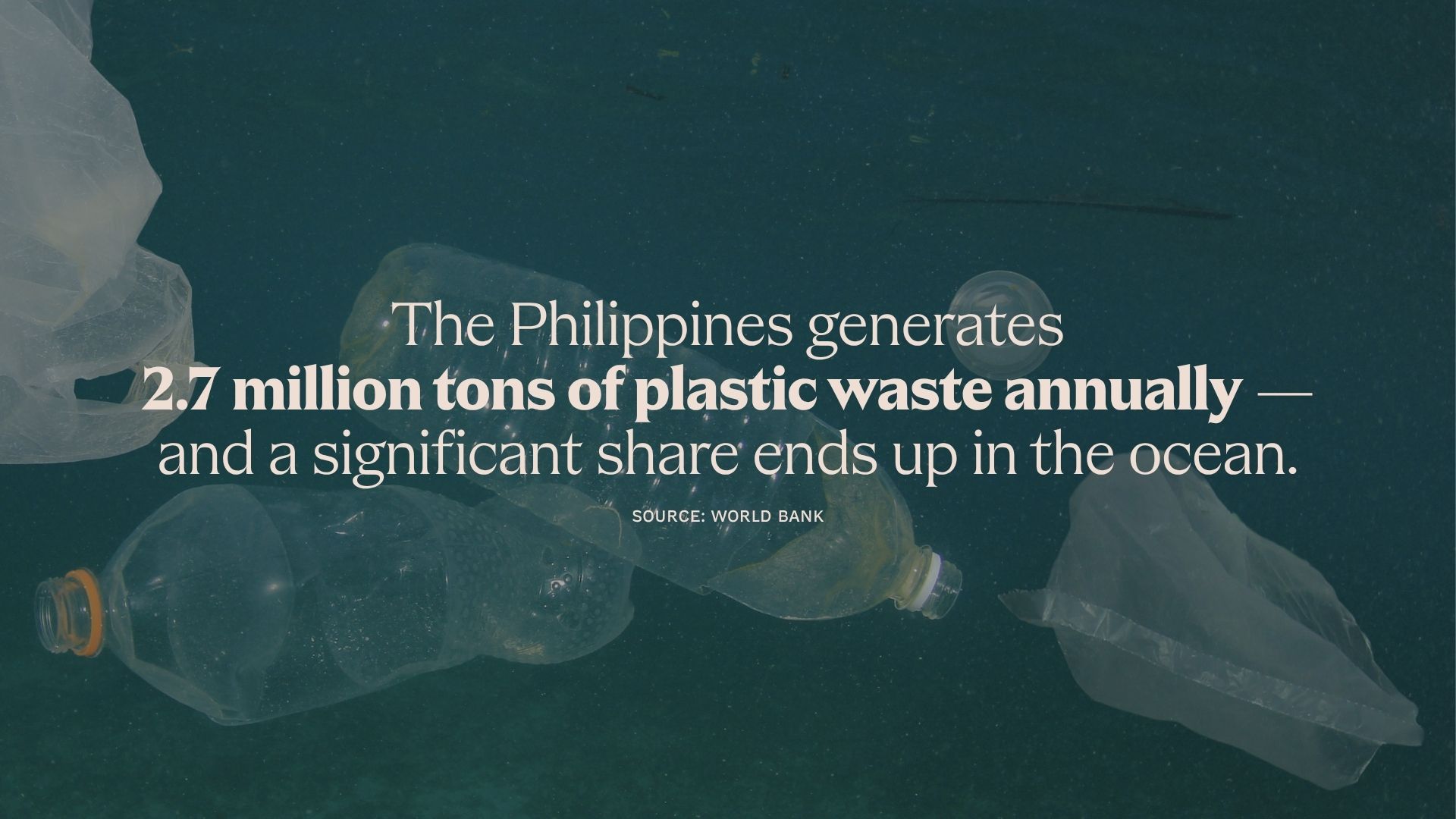
The Philippines has a well-documented plastic problem. According to the World Bank, the country generates some 2.7 million tons of plastic waste annually, with roughly 20% going directly to the ocean. The Philippines is home to seven of the top ten rivers in the world that contribute most to ocean plastic, a consequence of population density, proximity to waterways, and uneven waste management infrastructure across local government units.
Most recently, an Inquirer special report from May 2026 highlighted a troubling paradox: Filipinos produce relatively less plastic per capita than the global average, about 13kg per year versus the global average of 28kg, but more than half of that waste is expected to be mismanaged. That means left uncollected, openly dumped, burned, or improperly handled. Only about 9% of Philippines plastic waste is recycled.
The problem is not how much plastic Filipinos use. It is what happens to it after.
The Long Life of a Plastic Bag
Plastic has been around since 1907, when Bakelite — the first synthetic plastic — was produced. It took another four decades for plastic manufacturing to scale globally, and in just the last two decades, global production has doubled. In 2019, the world produced 460 million tons of plastic, nearly 230 times more than in the early 1950s.
Most of that plastic does not disappear. Single-use plastics are designed to be used once and thrown away. But they are not designed to decompose. In the environment, these materials break down into microplastics, tiny fragments that enter waterways, are ingested by marine life, and work their way into the human food chain.
This is why July matters. Not because a single month of plastic-free choices will solve a decades-long industrial problem, but because the habit of refusing, repeated by millions of people, changes what manufacturers produce, what retailers stock, and what governments legislate.
How to Join Plastic Free July 2026 in the Philippines
Joining Plastic Free July does not require signing up for anything, buying anything, or being perfect. The entry point is a decision, to try, for this month, to notice your plastic use and replace what you can.
You can take the official Plastic Free Pledge at plasticfreejuly.org and access resources, community stories, and local initiatives. Or you can simply start with the habits below, today.
8 Practical Plastic-Free Habits for Filipinos
-
- Bring your own tumbler or reusable cup.
Your morning coffee does not need a new plastic cup every day. Bring your own tumbler to your local cafe. Many coffee shops now offer a small discount for reusable cups, a small perk for a habit that adds up quickly. As a bonus, you are also helping small-business owners cut their packaging costs. - Dine in when you can.
Food deliveries arrive with layers of plastic — cups, bags, cutlery, seals, sachets. When time allows, skip the delivery and dine in at your neighborhood restaurant or carinderia instead. The food is hotter, the waste is less, and the experience is usually better. - Keep reusable utensils in your bag.
A small set of bamboo or stainless steel utensils — spoon, fork, chopsticks, and a reusable straw — takes up almost no space and eliminates the need for disposable plastic cutlery with every meal out. Make it a permanent fixture of your bag and not a July-only item. - Always carry a tote bag.
Plastic bags are still widely available in many parts of the Philippines, and it is easy to accept one without thinking. A tote bag folded at the bottom of your bag removes the decision entirely. You will always have one when you need it. - Buy loose produce directly from vendors.
Pre-packaged produce in plastic trays and cling wrap is convenient but unnecessary. Buying directly from fruit and vegetable vendors, butchers, fishmongers, and bakeries at the market eliminates most of that packaging. Bring your own containers and tote bags to carry everything home. - Try refilleries and tingi hubs.
The sari-sari store and tingi culture are already built for small-quantity purchasing, the eco-conscious version just requires bringing your own container. Programs like “Kuha sa Tingi” in San Juan City and “Tingi Station” in Baguio City are expanding this model. Look for a refillery or bulk hub near you and bring a reusable container on your next supply run. - Swap cling wrap for beeswax wraps.
For storing leftover food and ingredients, organic beeswax wraps are a practical, reusable alternative to cling film. Glass or stainless steel containers work just as well. Both options last for years and cost less over time than disposable plastic wrap. - Explore eco-friendly personal care products.
Bamboo toothbrushes, silk dental floss, shampoo and conditioner bars, metal razors, and reusable menstrual cups are now widely available in the Philippines, both physical and online stores. These are not fringe products anymore. Try swapping one or two on your next shopping run and see what fits your routine. The eco-friendliness is a bonus; the quality usually surprises people.
- Bring your own tumbler or reusable cup.
Plastic-Free Habits Do Not Have to Stop When July Does
The goal of the Plastic Free July challenge is not to survive thirty-one days of inconvenience. It is to use those thirty-one days to build habits that outlast the month.
After July, take a moment to reflect on which of these changes you can realistically maintain. Not all of them have to stick — but even one or two, practiced consistently, makes a difference over the course of a year. Look at the plastic items you use most often and identify which ones can be replaced with a reusable or compostable alternative.
Staying informed also helps. New sustainable products, refillery options, and community initiatives are emerging in the Philippines regularly. The more you know about what is available, the easier it becomes to make different choices without feeling like a sacrifice.
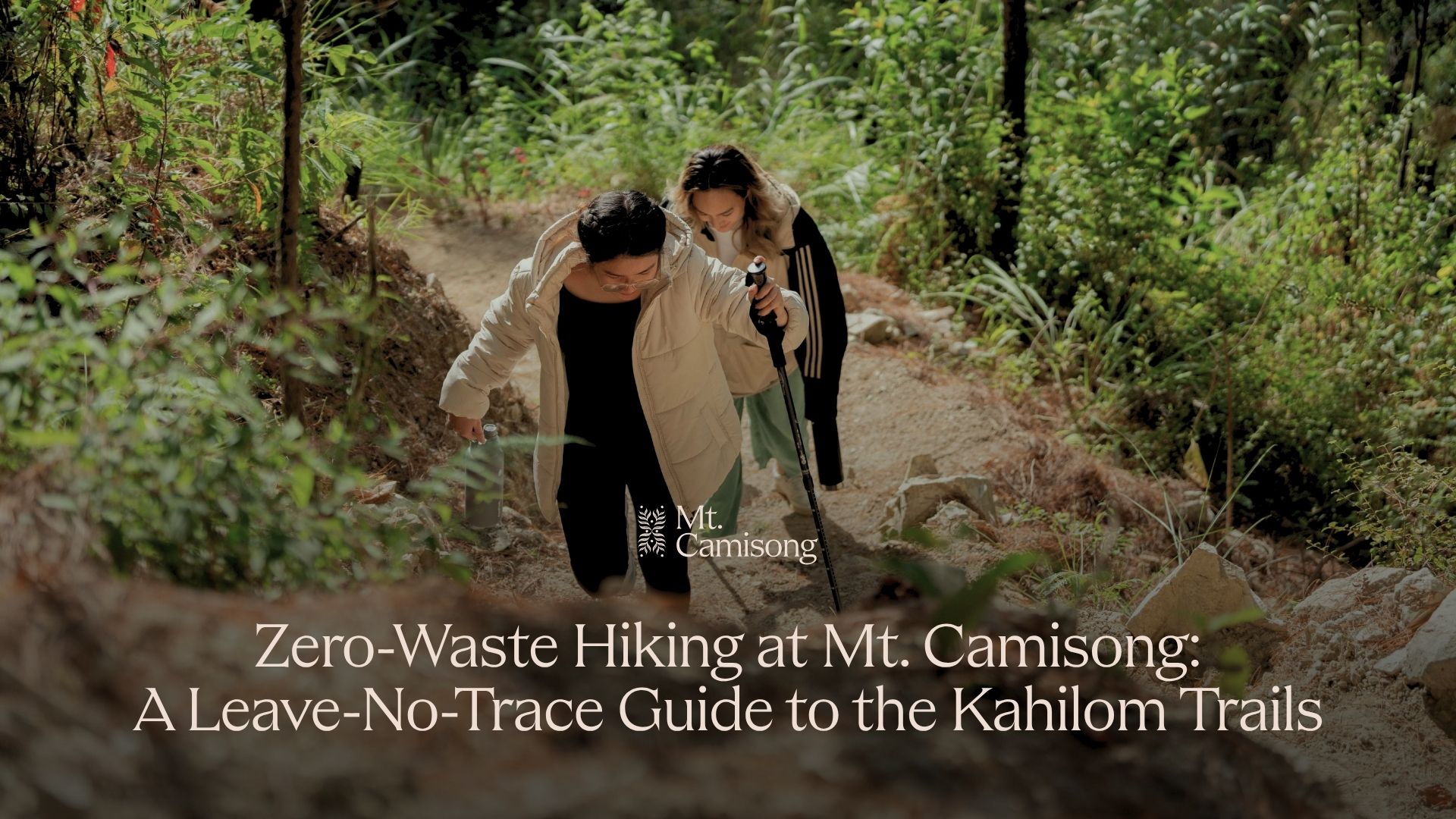
At Mt. Camisong, we practice what we ask of our visitors. Our park operates with a strict no-plastic, leave-no-trace policy. Visit our Binhi Sustainability Wall to see how we incorporate environmental stewardship into our daily operations, and to take home ideas you can apply in your own life.
We have also put together a catalogue of eco-friendly practices we implement at Mt. Camisong that you can adapt to your daily routine. Read them here, and if Plastic Free July has sparked something in you, come visit the park and see what sustainable tourism looks like in action. Book your visit to Mt. Camisong through our page here.