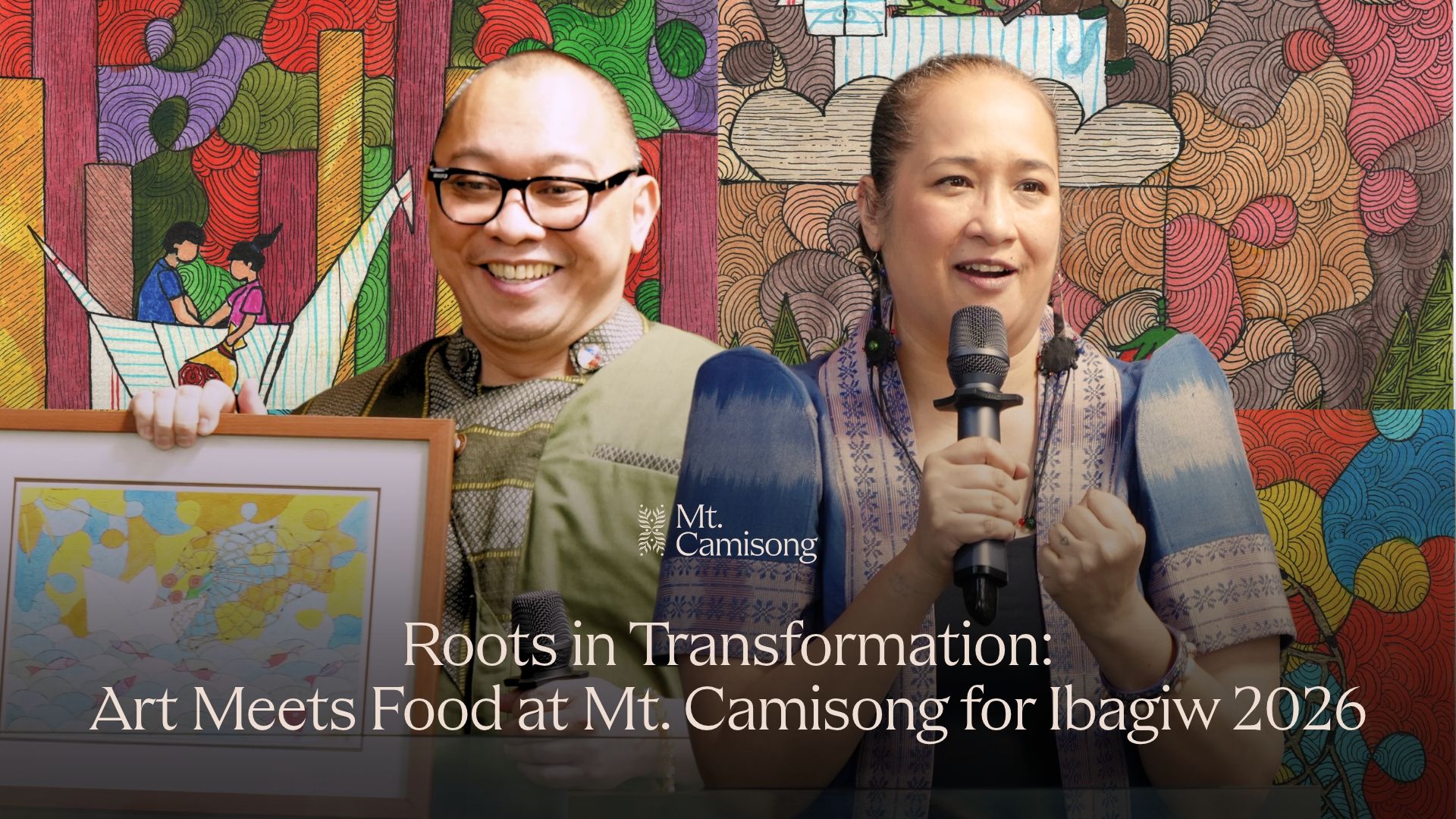
ITOGON, BENGUET – The walls of Alapaap Dining looked different on Saturday, November 7. Baguio artist Amparo Moldero-Magallanes had hung nine new paintings, some partially made from expired dyes, soap-lab rejects, and canvases she had used before. Four of them were paired with dishes on the menu.
Mt. Camisong launched its part in Ibagiw 2026, the ninth run of Baguio’s creative festival, with a Gastro and Art Creative Crawl that pairs the city’s chefs with its visual artists. Baguio has held the UNESCO Creative City title for crafts and folk art since 2017, and the crawl is one way the festival puts that to work: artists hang their pieces inside restaurants and cafes, where guests can look closely over a meal and, if they want to buy one, let the staff know.
Mt. Camisong’s collaboration carries the subtheme “Roots in Transformation.” It looks at how the park connects to Filipino and Cordilleran identity, to nature, food, and cultural memory, and how everyday materials can become something current without losing what they are.
Inside the Gastro and Art Creative Crawl
The program moved painting by painting. Amparo Moldero-Magallanes presented each artwork and the dish that inspired it, then passed the floor to Chef Stanley “Stan” Suva, Mt. Camisong’s vice president for food and beverage, and together they talked through how the food and the painting connect. The Lila Band played live throughout the event.
After the pairings, the group went on a sustainability tour led by Victoria “Beki” Tenefrancia, Mt. Camisong’s vice president for sustainability, and took a closer look at Mt. Camisong’s sustainability practices, including how the kitchen handles its waste and how the park runs its grounds.
Ludette Querubin, Mt. Camisong’s board chairperson, said sustainability is still a work in progress, and that the park keeps learning through its partnerships with artists, chefs, and the community.
Who came to the Ibagiw 2026 launch
The launch drew guests from the country’s cultural and creative circles. Among them were Commissioner Martin Emile Lopez, cultural administrator, arts advocate, and Senior Director of the Far Eastern University Center for the Arts; Engr. Aloysius Mapalo, City Tourism Officer of Baguio; Paolo Mercado, Founder and President of the Creative Economy Council of the Philippines; and Gwynth Anne Palmos, Programme Analyst for Climate Action at the United Nations Development Programme.
Also among them were Venus Tan, Chief Operating Officer of the Tourism Promotions Board Philippines, and broadcast journalist Cecilia “Ces” Victoria Oreña-Drilon.
Meet artist Amparo Moldero-Magallanes
Amparo Moldero-Magallanes grew up with artist parents and started painting as a child. Then life pulled her elsewhere, and for years her work appeared only on the packaging of her small business.
She came back to the easel in her golden year, when she realized her doubts were small next to how fast time passes. She calls her style whimsical and dreamlike, a quality she traces to both her parents, and she paints to bring people back to simpler, lighter days.
Her background in medical technology taught her to make the most of what is on hand, and it shows in the work she brought to Ibagiw. She mixed watercolor palettes from expired Abra dyes, turned soap-lab rejects into paint, worked old glitter dyes into her acrylics, and painted over canvases she already owned. She calls it a circular economy on canvas, where she transforms materials instead of throwing them away. Her paintings now hang on the walls of Alapaap Dining.
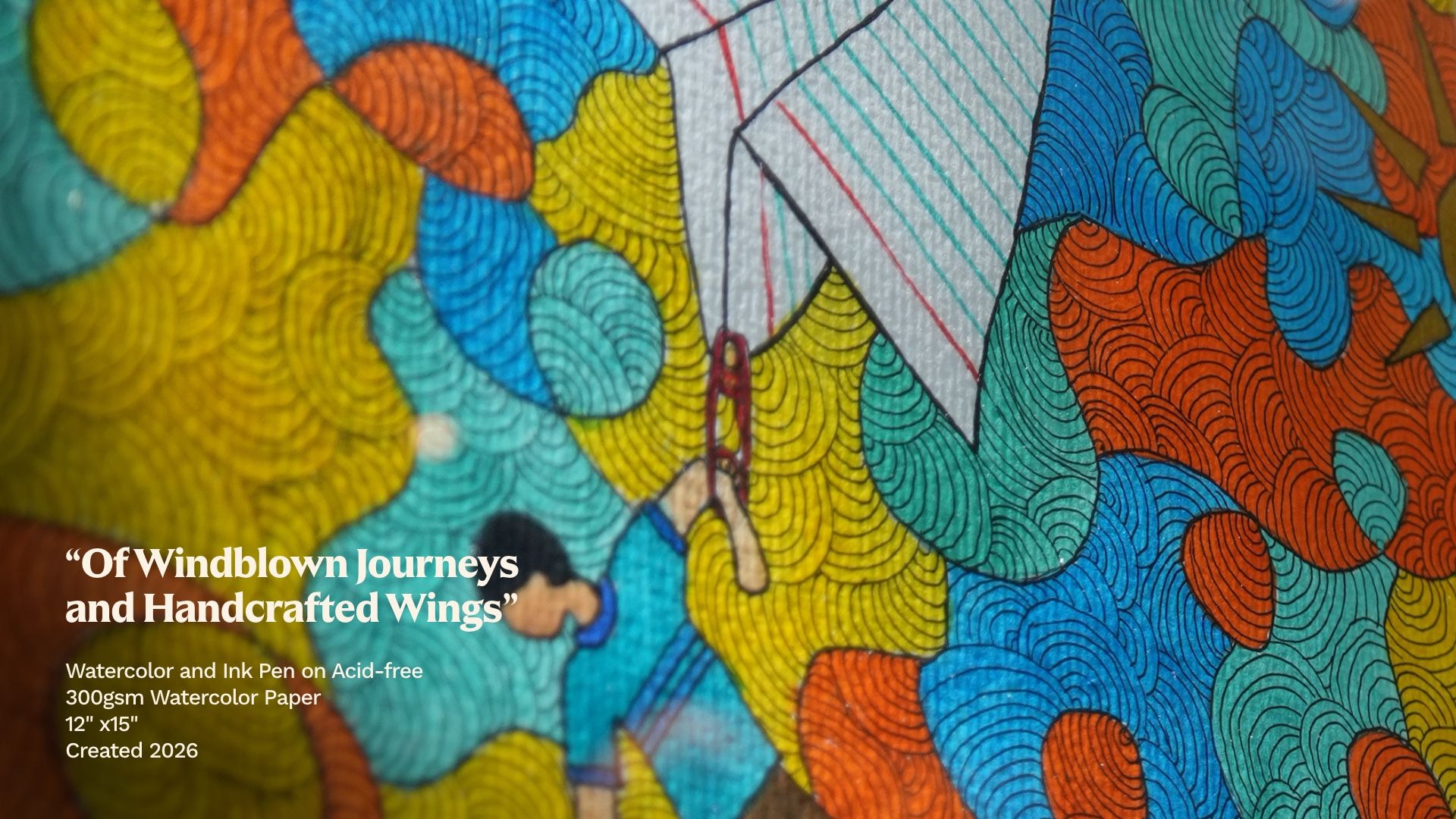 Amparo Moldero-Magallanes made her Ibagiw pieces from expired Abra dyes, soap-lab rejects, old glitter, and canvases she had used before.
The art and food pairings, course by course
Chef Stanley “Stan” Suva, Mt. Camisong’s vice president for food and beverage, works the same way in the kitchen. He treats ingredients and techniques the way an artist treats materials and tools, and he builds his menus to cut waste. His cansi, for one, uses underripe strawberries that are too firm for desserts.
Chef Stan built the menu around four of Amparo’s paintings, one dish for each.
“Of Dreams Cast at Sea” met the Kinilaw, the starter. It is an older piece that found its match on the plate. Chef Stan says the painting reminded him of a kinilaw he had made years earlier.
“Of a Strawberry and a Floating Cow” met the Strawberry Cansi, a playful twist on the Western Visayas beef soup traditionally soured with batwan. Here, it travels toward Benguet, where local strawberries add a touch of sweetness.
“Of Crispy Steps and Borrowed Flight” met the Pinoy Chicken BBQ with Smoked Pineapple Salsa, served with Pinoy ampaw made from Unoy heirloom rice from Pasil, Kalinga. The mountain swirls in the painting echo the puffed rice on the plate.
“Of Leather Towers and Sweet Rivers” met the Chocolate Mousse. The towers mirror the layers of fruit leather, while the river beneath stands in for the mousse.
A drink, Bukang Liwayway, rounded out the menu. All four paintings are watercolor and ink pen on acid-free 300gsm watercolor paper, 12 by 15 inches, made this year.
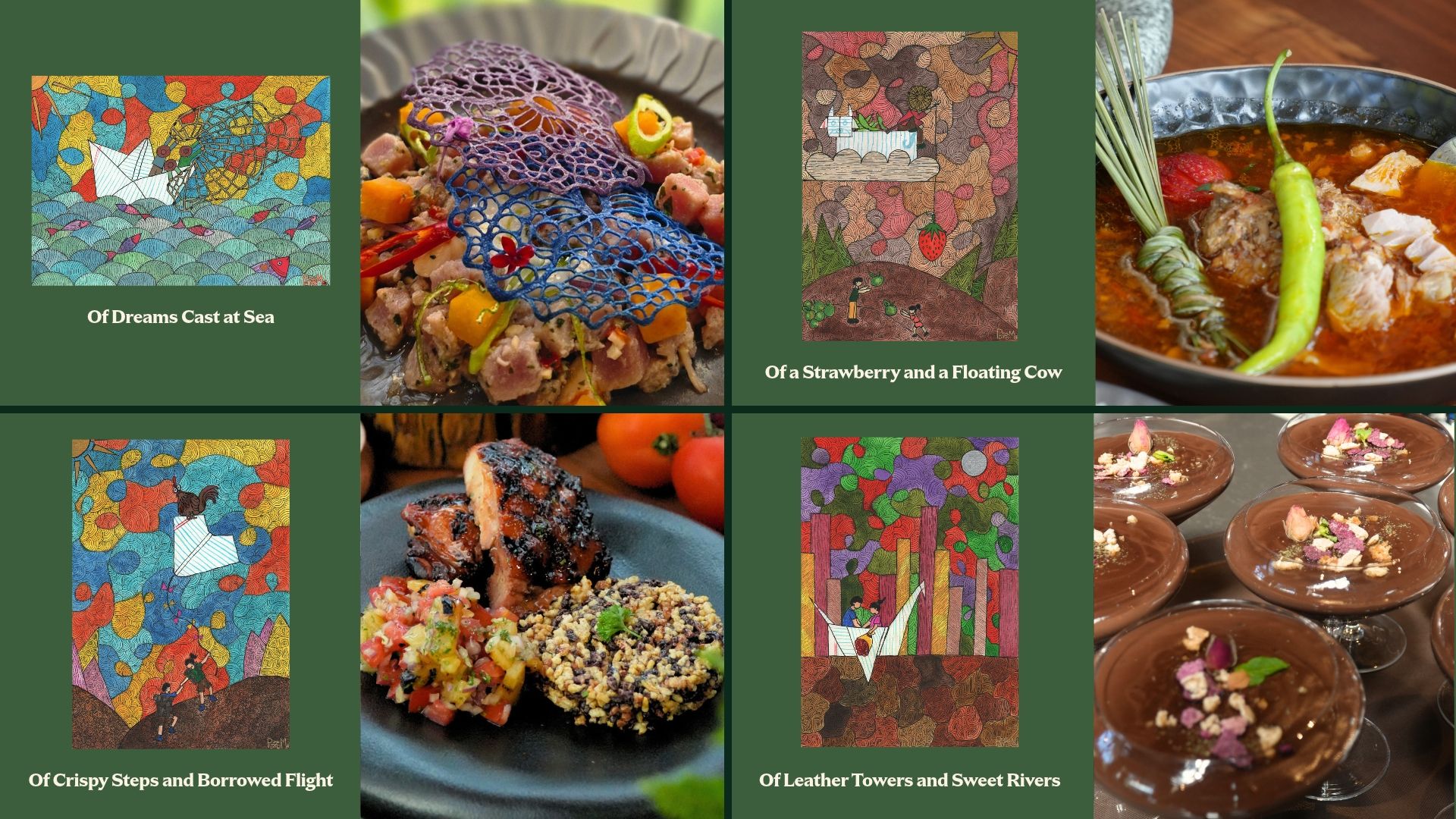 Each of Chef Stan’s dishes answers one of Moldero-Magallanes’s paintings, from the Kinilaw to the Chocolate Mousse.
The paintings are up at Alapaap Dining until November 30, and each one is for sale. Come see them over a meal, and take one home if it speaks to you.