In research assessing industry or occupational burnout in Southeast Asia, the Philippines leads at 70.71% where employee burnout was usually tied to severe depression and anxiety. During these high stress seasons, it is essential to distance yourself from job demands. Instead, engage in activities that foster joy, relaxation, and a sense of accomplishment outside of your career.
In such moments where you would want a moment to escape, why not try stepping into the forest?
What is Forest Bathing?
Forest bathing is not hiking
Shinrin-yoku is a Japanese practice which translates to ”forest bathing.” Shinrin means “forest,” and yoku means “bath.” This activity involves “bathing” in the forest atmosphere, or taking in the forest through our senses. It is not hiking, nor is it jogging. It is simply being in nature, and tapping into that connection through all of the senses. Through shinrin-yoku or forest bathing, you can feel more relaxed and happier with reduced stress, and become healthier with reduced risk of non-communicable diseases and cancers.
Forest bathing stimulates all the five senses
Studied by the Japanese government since 2004, forest bathing was found to reduce blood pressure, lower levels of stress hormones, and improve sleep, concentration, and memory. Sensory immersion can take your mind away from negative thoughts caused by depression or anxiety. It reminds you to be in the present moment. From constantly analyzing, evaluating and judging everything you experience, you are guided to go back to simply noticing and sensing.
Observe the shapes and colors of the forest landscape. Smell the fragrance of trees, flowers, and the earth. Listen to the rustling of leaves from the breeze, the singing of birds and the calls of the wildlife living in the forest. Taste freshly foraged fruits and foods. Touch tree trunks. Gently feel the texture of petals and foliage. Absorb the forest atmosphere with your whole body. Sensing, with intentionality, can be a grounding experience and an exercise in mindfulness.
Why Tired Filipinos Specifically Need This
The numbers behind the burnout
In the country, research reveals that 87% of Filipino workers experience at least one of the following work-related mental health issues: tiredness, trouble sleeping, stress and anxiety, loss of interest, difficulty concentrating, loss of self-confidence, feelings of worthlessness, and appetite or eating disorders. More troubling is that half of the Filipino workforce is affected by more than four of these repercussions, considering that the number is around 10% higher than the global average.
From the same study in 2023, 33% of respondents reported experiencing burnout, but only 22% of them sought help from healthcare professionals. Individuals are not to blame for this matter, however. Stemming from the general stigma about mental health issues, there is a gap within companies and the support they offer to their employees. Workplaces all over the country must have a range of varying systems to help out their workers on these serious health matters.
Why Filipino work culture makes it worse
Considering the current Filipino work atmosphere, encouraging collective behaviors like peer pressure disguised as “pakikisama,” the normalization of overwork, tech-blurred boundaries between work hours and rest hours, and the general difficulty in setting the boundary between personal and professional matters contribute to burnout.
For those feeling work burnout, you just might need more time outdoors. Modern research has been supporting the idea that spending time in green spaces can positively soothe the nervous system. In nature, your body and thoughts lean into relaxation as you detach yourself from the burden of work. This is a more effective way to refresh the mind, compared to taking breaks in closed, indoor rooms.
Ironically, our urban landscapes make encountering nature feel almost impossible despite the Philippines being surrounded by some of the most biodiverse forest ecosystems in the world. Filipino workers rank among the most nature-deprived in the region.
For the typical Filipino worker who has limited time, and financial resources, the solution for work burnout is not another productivity app or a longer sleep schedule — it is literally just going outside.
Tiktok and Pinterest influence
Forest bathing went viral on TikTok in 2025 for a reason. Pinterest searches for “quiet places” and “calm places” jumped 50% and 42% since 2024. Photos and videos of people enjoying a stroll under green canopies, touching lush plants, tree barks, and freshly dewed moss made forest bathing look like the antidote to modern life’s strains. This is not a random trend — it is a mass-market response to a real, documented mental health crisis.
Benefits of Forest Bathing
It lowers stress hormones
Studies have shown that forest bathing significantly reduces physiological biomarkers of stress like cortisol, adrenaline, and noradrenaline, which helps in stress management and improves one’s overall mood.
It boosts your immune system
Research has found that trees and plants release phytoncides, a chemical that produces a protective antimicrobial effect on human bodies. Phytoncides stimulate the immune system, increasing the activity of natural killer cells (NK cells), which defend the body from viruses and tumors.
It improves mental health
The forest offers a tranquil and peaceful environment which allows the mind to take a break from the noise of daily life. A forest bathing session can refresh one’s mental state by providing the space to recenter and ground the self to the present. Bringing awareness back to the body, the immediate environment, and the now often brings about mental clarity, which in turn promotes an improvement in concentration, memory, and problem-solving skills.
It helps you sleep
A visit to the forest gives you that natural light and fresh air your body has been craving for a long time. These essential experiences are needed to regulate circadian rhythms. A calm nervous system makes it easier to fall asleep, and arrive at a deep and restorative sleep.
How to Actually Do It
A Step-by-Step Guide for First-Timers
1. Choose your forest.
The first step to start forest bathing is to find a forest! Look into visiting local hiking trails or joining forest trekking tours. Wandering in a nearby forested area can also work.
However, not everyone lives close to a forest, nor has the ability to travel far to try out forest bathing tours. As an option, city residents can try walking around in your local park or somewhere with a lot of trees. This would not have the same effect as immersing yourself in a deep forest area, but even walking in an urban park has health benefits. It can improve your mood, heart rate variability, and memory.
2. Leave the goal behind.
There is no destination. Forest bathing is the opposite of a hike to a summit or a race to the finish line. This relaxing activity only requires you to sit with nature and absorb its natural beauty.
There is no set time limit. Unlike other physical activities, you are not trying to beat record times. Feel free to wander around the forest at your own pace, and stay as long as your body feels is needed.
Leave technology behind. Walk about the forest without step trackers, smart watches, or smartphones. These make you focus on performing physical activity, and distract you from truly immersing yourself in the forest atmosphere.
3. Walk slower than you think you should.
Allow yourself to slow down. Walk at an unhurried, meditative pace. By letting go of the pressure to perform or achieve goals, you are cueing your brain to relax which lowers cortisol levels and calms the nervous system. After all, forest bathing is a practice of “being” rather than “doing.”
4. Engage one sense at a time.
During your walk about in the forest, stop frequently to take in the landscape’s sights and sounds. You can even sit down to really notice all the living things and objects that make up the forest’s ecosystem.
Start by paying attention to your breathing. Close your eyes, and take a few deep, slow breaths. Clear your mind and shift your focus to feeling the physical world around you. Then, open your eyes and bring your awareness back to the forest.
5. Stay for at least two hours.
Take your time while forest bathing. A two-hour session can create a significant improvement in mood, tension, and mental clarity. In those two hours, the first 15 minutes is often the time for you to mentally settle. The next 30 minutes is for your senses to acclimate to your surroundings. Deeper restoration tends to follow in the time after that.
Visiting the forest regularly can help you feel refreshed.
6. Go without headphones.
Turn off your electronic devices and gadgets. Set aside an hour or two of digital detoxing so you can focus on the natural environment. Wander slowly through the woods, listening to birdsong and the calls of the animals that call the forest home. Open your awareness to the babbling of a stream, the crunch of the soil underneath your feet, the crisp forest air, and the sunrays passing through the forest canopy above you.
Preparing for your first forest bathing session
The forest is indeed an easy and inviting space to reconnect with nature. But even when visiting the safe, outdoor spaces, you will still need to prepare for your trip to maximize a relaxing experience.
1. Wear appropriate clothing and gear.
Make sure to wear suitable trekking or hiking attire. This usually includes clothes made with breathable fabrics, which cover your arms and legs, but still allow you full range of movement. Bring a cap or a hat to avoid sun exposure. For footwear, make sure that you wear shoes that have traction to grip slopes and slippery surfaces. You can also pack a raincoat in case of sudden changes in weather.
2. Familiarize yourself with the forest.
Do a little research about the forest you will be visiting. Identify accident-prone areas, poorly marked trails, or heavily isolated spaces, and avoid them, especially when you will be hiking alone for your safety.
3. Look into possible allergenic trees and plants in the forest area.
Try to know if certain plant species grow in the area and if they are close to paths. Be careful when touching trees that host lichen and mosses, or unfamiliar plants which may trigger allergic reactions.
4. Prepare for insect encounters.
Visiting the forest is visiting someone else’s home. Expect bugs, caterpillars, ticks and other animals during your stay. Wear insect repellent and keep a safe distance from any wild animal you may see on the trail.
5. Lessen digital and mental distractions.
To fully immerse yourself in the forest atmosphere, put your phone on silent and leave it in your bag for emergencies only. Having your phone easily accessible can draw you to check notifications or take photos instead of being present in the moment.
Leave your headphones behind, and avoid loud conversations. Silence is part of the forest bathing experience. Keep your ears open to the sounds of nature.
How Often Should You Go?
Current research says that most people feel the benefits of forest bathing when consistently done weekly for around 2 hours. If you are in a rush, even 10-20 minutes of contact with nature can refresh your body and mind.
The more important part of this is to keep forest bathing as a regular practice so your nervous system can keep stress at bay. Treat this as a relationship with the forest–one that gives you peace, and the space to become your best self again.
Mt. Camisong as the Place for Forest Bathing
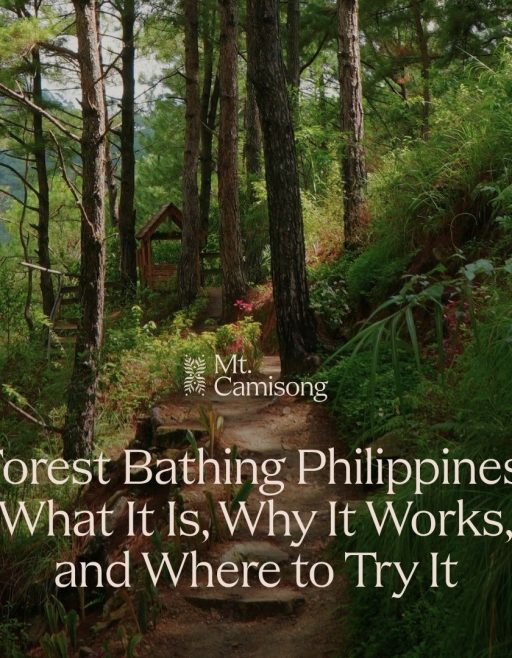
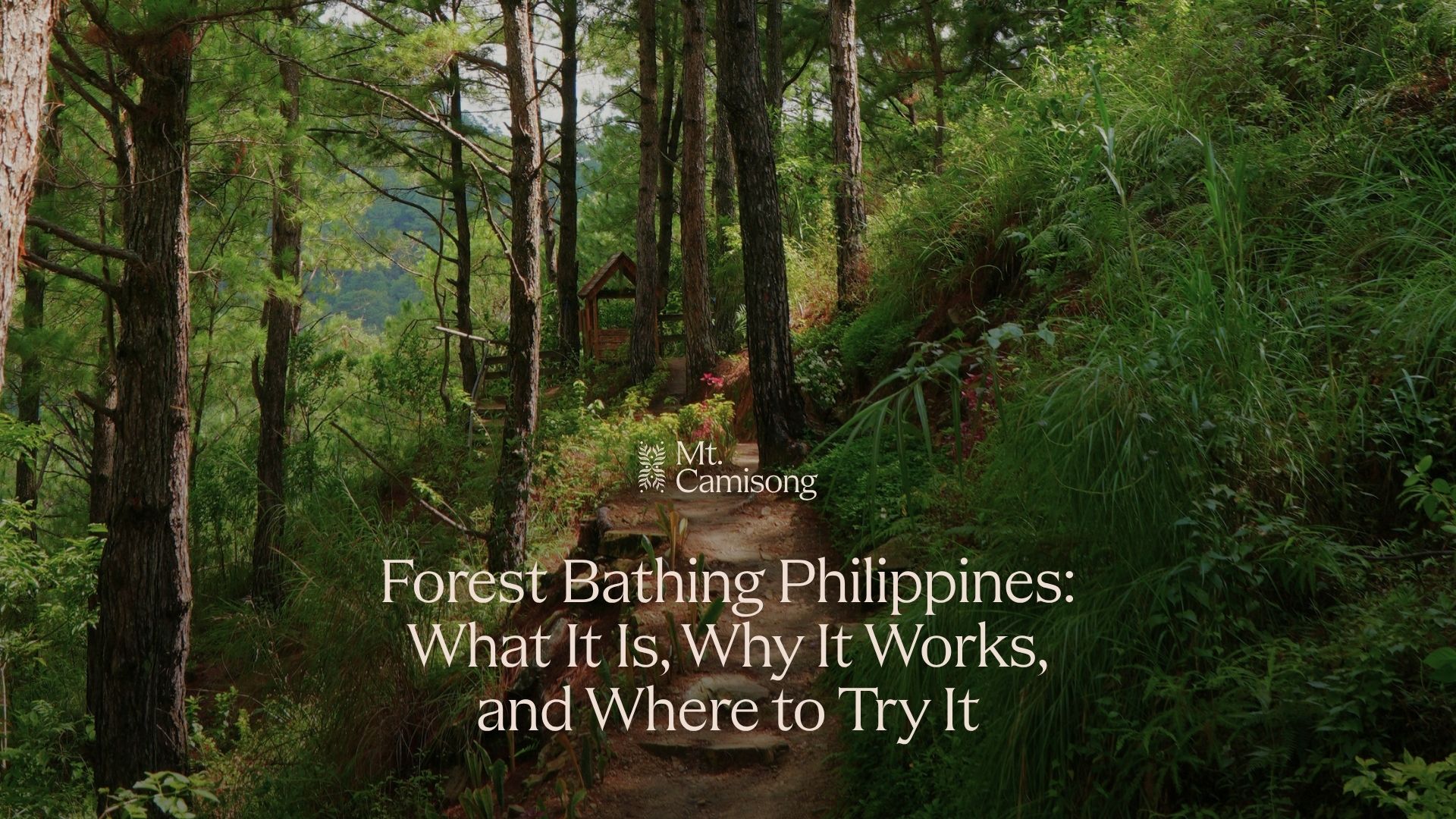
Tucked in the mountains of the Cordillera region, Mt. Camisong Forest Park and Events is a 10-hectare forest park in Itogon, Benguet just 30 minutes away from Baguio City. At our Kahilom Hiking Trails, you can finally try out forest bathing at your own pace–no rush, and nothing else to do but just be.
Visit Kahilom Ranger Station, with proper attire and gear on, for a quick orientation and start your journey to reconnect with nature. Our trails can be freely explored by guests without any guide.
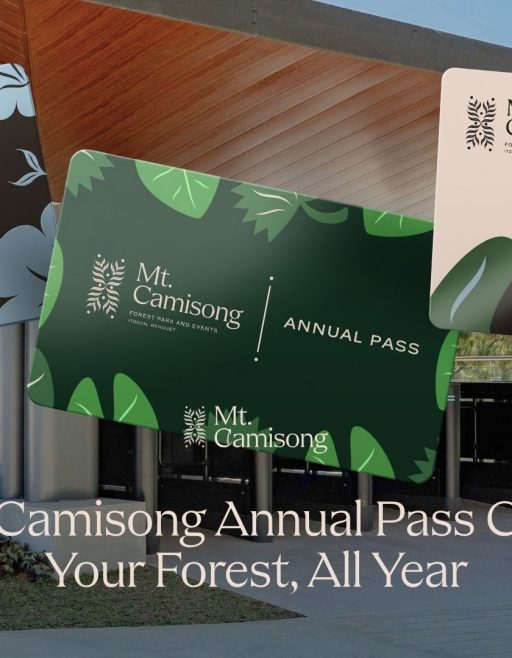
For those who regularly practice forest bathing and are looking for a quick access to a forest, you may avail of our Annual Pass membership. Having a membership gives you unlimited visits to our forest park for a whole year.
You can learn more about the terms and perks of an Annual membership through this page.
The Forest Has Always Been Here
Forest bathing does not require special equipment nor special nature skills, but it does challenge us a little. By letting go of expectations and accepting each moment outdoors as it is, you are prompted to surrender yourself to nature. It is a simple yet powerful way to deepen our connection with our environment, and to teach us that nature should never be far removed from our daily lives.
As we become more aware of the importance of mental well-being, let this emerging trend remind us that the forest has always been there–waiting to be part of our healing journey, waiting to welcome us home.